Remote and hybrid work have created a simple but uncomfortable problem for organisations: work is no longer tied to a physical space, but accountability still needs structure.
In traditional offices, presence itself was proof of work. If someone was at their desk, they were considered active. In hybrid environments, that assumption no longer works. Employees may be working from home, visiting clients, travelling between sites, or splitting their week across multiple locations.
This shift has exposed a gap that many organisations did not anticipate: how do you measure attendance when “attendance” is no longer physical?
Time attendance system have become essential not because work has changed, but because visibility has become harder.
The real problem: visibility has disappeared, not productivity
A common misunderstanding about hybrid work is that productivity has declined. In reality, what has declined is direct visibility.
Managers no longer see:
- when work actually starts
- how consistently employees are logging hours
- whether remote time matches scheduled time
- how often informal absences occur
- how work patterns vary across teams
This creates uncertainty rather than inefficiency.
Without structured attendance data, organisations end up relying on:
- chat availability
- email response timing
- task completion signals
- manual check-ins
These are indirect indicators, not measurable workforce data.
Time attendance systems replace assumption with recorded activity.
Why traditional attendance tools fail outside the office
Legacy attendance methods were designed for one environment: the office entrance.
Once employees leave that environment, those systems lose relevance.
Common breakdown points include:
- biometric devices only working on-site
- manual timesheets being easy to misreport
- spreadsheet-based tracking becoming inconsistent
- no verification for remote login times
- fragmented records across teams and locations
In hybrid teams, this creates uneven accountability. Office staff are tracked precisely, while remote staff often rely on self-reporting.
This imbalance becomes a management issue as much as a technical one.
Digital attendance changes what “proof of work” means
Modern time attendance systems shift the focus from physical presence to verified activity.
Instead of asking “Are you in the office?” organisations now track:
- when work begins
- when work ends
- whether schedules are followed
- whether attendance matches assigned shifts
This is not surveillance—it is structure.
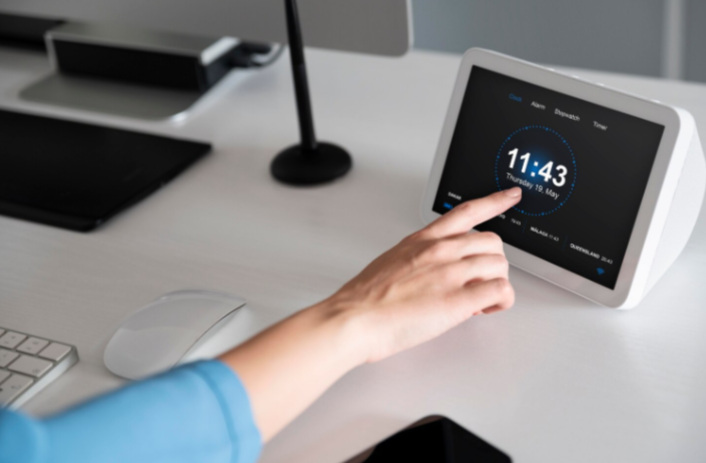
Employees can record attendance through:
- mobile applications
- secure web login systems
- biometric devices when on-site
- multi-location authenticated check-ins
The key change is consistency. Whether someone is remote or in-office, the same logic applies.
Cloud systems solve the biggest hybrid problem: fragmentation
Hybrid work creates fragmented data.
One team may be:
- in the office three days a week
- working remotely two days
- logging time through different methods
- reporting across different supervisors
Without a central system, attendance becomes scattered across tools.
Cloud-based time attendance systems solve this by centralising everything into one place.
This creates:
- unified attendance records across locations
- real-time updates instead of end-of-month summaries
- central control for HR and management
- consistent policy enforcement
More importantly, it removes dependency on physical infrastructure.
Accountability in hybrid teams is not control—it is clarity
There is a difference between monitoring employees and maintaining accountability.
Hybrid teams work best when expectations are clear:
- when employees are expected to be active
- how working hours are defined
- how attendance is recorded across locations
- how exceptions are handled
Without clarity, flexibility turns into inconsistency.
Time attendance systems support accountability by creating:
- time-stamped records of activity
- verifiable check-in patterns
- structured reporting of working hours
- consistent attendance rules across teams
This reduces ambiguity for both employees and managers.
The hidden benefit: better team coordination
One overlooked advantage of modern attendance systems is how they improve coordination.
When teams operate remotely, one of the biggest challenges is timing alignment:
- overlapping working hours
- delayed responses
- unclear availability windows
- uneven shift coverage
Attendance data helps managers understand:
- when teams are actually active
- where overlap is missing
- which departments have inconsistent schedules
- how workload aligns with presence
This allows better planning without micromanagement.
Why HR and payroll depend on attendance accuracy
Attendance is no longer just an HR record—it directly affects payroll, compliance, and reporting.
In hybrid environments, payroll errors often come from:
- inconsistent remote hour tracking
- missing attendance logs
- manual corrections
- delayed approvals for overtime or leave
Time attendance systems reduce this friction by creating structured data flows:
- attendance → verified hours
- hours → payroll calculation
- exceptions → approval workflows
This removes repetitive reconciliation work for HR teams.
Compliance becomes easier, not harder
For organisations operating in regulated environments, hybrid work introduces a new challenge: proving attendance consistency.
Digital attendance systems provide:
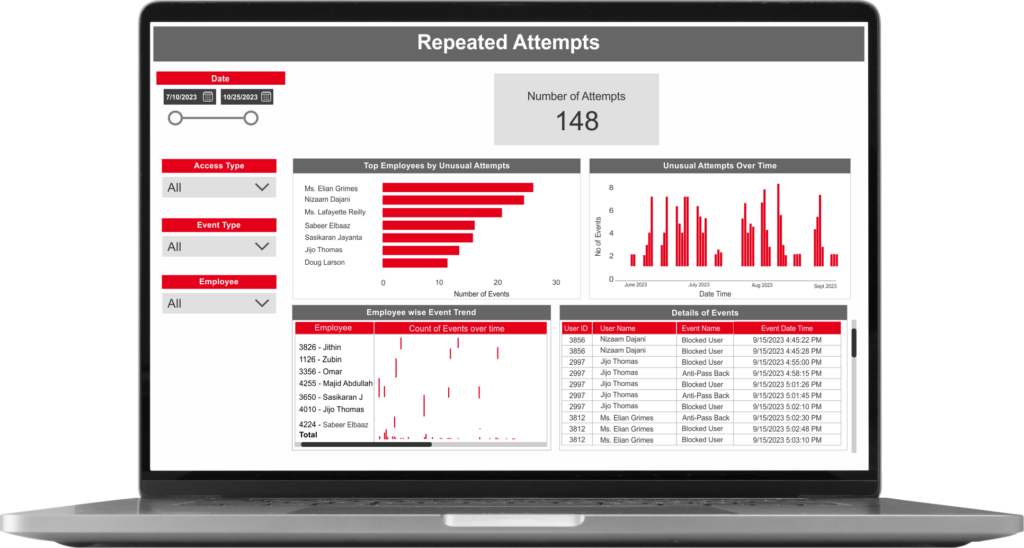
- audit-ready logs
- historical attendance records
- access-based verification trails
- system-generated reports
Instead of reconstructing attendance after the fact, organisations can retrieve it instantly.
This is particularly important for large or distributed operations where manual verification is no longer practical.
Remote work doesn’t remove structure—it demands better structure
One of the biggest misconceptions about hybrid work is that structure becomes less important.
The opposite is true.
Without physical presence, structure must be built into systems rather than environments.
Time attendance systems provide that structure by defining:
- how work time is recorded
- how attendance is validated
- how consistency is measured
- how exceptions are handled
This creates stability in otherwise flexible environments.
The direction workforce management is heading
Attendance systems are gradually evolving into broader workforce intelligence platforms.
Instead of only recording time, future systems will:
- detect attendance patterns automatically
- flag irregular work behaviour
- predict staffing shortages
- integrate with project performance systems
- support AI-driven workforce planning
The goal is no longer just tracking attendance—it is understanding workforce behaviour.
Modernise Hybrid Workforce Management with AL Maha Business Systems
Remote and hybrid work have not reduced the need for attendance systems—they have increased it. What has changed is the nature of attendance itself. It is no longer about presence in a building but about verified participation in work.
Time attendance systems provide the structure that hybrid teams need to stay consistent, accountable, and coordinated without losing flexibility.
For organisations in Oman, this shift is not optional anymore. It is part of building a sustainable workforce model that works across locations, schedules, and evolving business demands.
AL Maha Business Systems provides advanced time attendance solutions designed for hybrid, remote, and on-site teams across Oman. The company offers systems that combine cloud-based attendance tracking, biometric verification, and mobile workforce management to deliver accurate, real-time visibility and structured accountability.
Reach out now to implement a time attendance system that brings clarity, consistency, and control to your modern workforce.
About the Author
The author is a workplace technology and security systems writer with experience in physical access control system, biometric authentication, and workforce management solutions. They specialise in translating complex security and attendance technologies into clear, practical insights for modern organisations operating across corporate, government, and industrial environments.